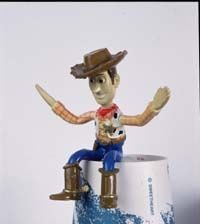
It starts with graphite on paper. The art department creates hundreds of sketches before writing code or rendering polygons. These arose from late-night discussions with writers and directors, and the chaotic ideas were eventually whittled down to a single design. Once the design is complete, the animators take over. They build the characters in 3D on a computer. In some cases, we start by sculpting a physical clay model, scanning it and converting its shape into digital wireframe. This is an old-school method in a high-tech industry.
Modeling the static figure is not difficult. This is geometry. You can model chairs, cars, rocks, etc. relatively easily. Animating them is a real pain. The human eye is very sensitive to unnatural movements. This illusion is immediately shattered when the characters walk robotically or blink lazily. Take walking. It’s not just about moving your legs. It involves swinging the hips, shoulders, head and arms to maintain balance. Every part of the body must participate in one fluid movement. If you get it wrong, it’s jerky. If you get it right, you feel alive.
To overcome this problem, animators treat the characters as puppets with an internal skeleton. This is called the articulated model. Characters are built on bones and joints that follow a strict hierarchy. Think of your elbow as a top joint. It controls the upper arm, forearm and hand below it. When you move your elbow, the rest automatically follows. It’s like pulling a string on a marionette. There is no need to manually adjust each finger or joint. When you move the joint, the hierarchy does the rest.
This structure makes keyframing and tweening much less painful. Animators don’t draw every frame. Place the characters in key positions, such as the beginning, peak and end of the action. The computer then fills in the “in-between” frames. Faster. It’s cleaner. Inverse kinematics makes it even easier.
Let’s look at a simple example. Animators want the characters to raise their hands. When using inverse kinematics, the don’t move the shoulder, then the elbow, then the wrist. just place the hand in the desired position. The software calculates how the arm and shoulder must twist and bend your arms and shoulders to get there. It handles the physics. Modern animation tools often come preloaded with inverse kinematics models for basic movements such as walking and sitting. Adjust the settings and your character will move naturally.
And then there’s motion capture. This is also a mainstay of realistic character animation. An actor wears a special suit full of sensors. These trackers are placed on key joints such as the knees, elbows, shoulders and spine. As the actor perform, computers record their every move. The data can be used in two ways. First, you can control the limbs of your animated character directly in real time. actor actually control digital characters. The second is data serves as a guide. The animator uses the raw motion as a reference and models and adjusts the character’s animation based on this. This makes even subtle changes in weight and balance feel real.
Both methods rely on the same basic logic of hierarchy and inverse kinematics. Whether you’re building from scratch or capturing a performance, the goal is the same. Make your computer behave like a human.
These techniques are combined in the feature film. It’s not just about the character walking. It’s about allowing them to exist in the world.