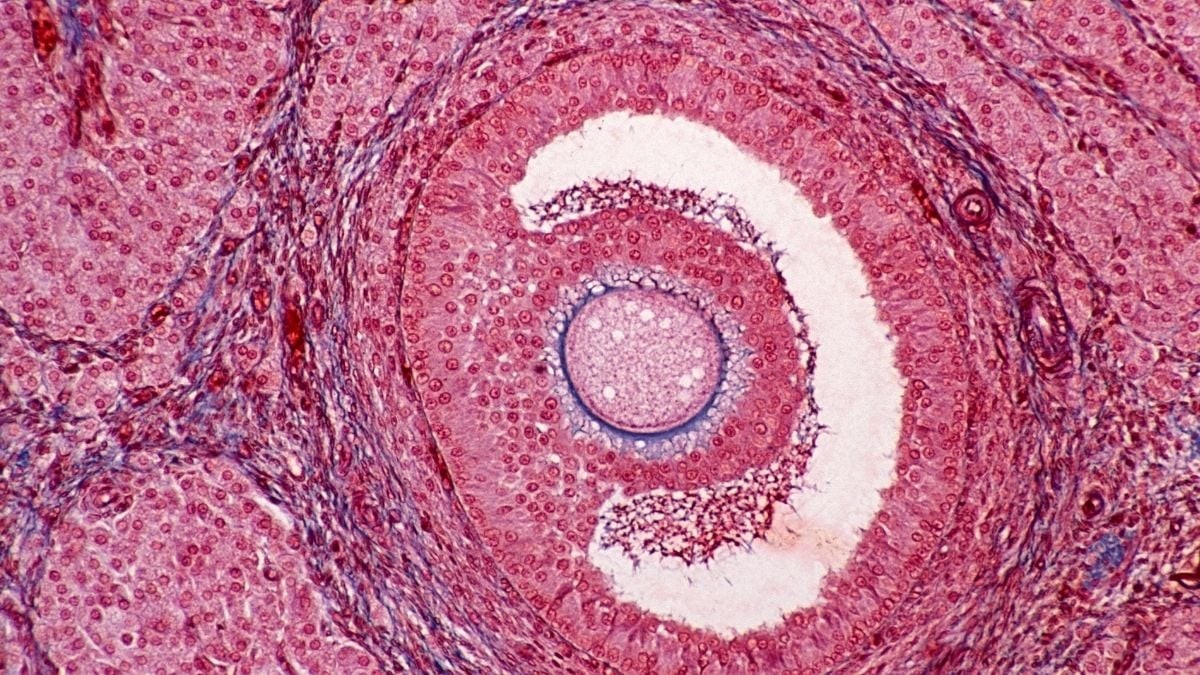
They don’t wait for the period to stop. They don’t care about your birth control pill. An ovary starts aging on day one.
Actually, it starts the very first time you get a period. Its job isn’t just to dump out an egg once a month. It works hard to develop follicles. It selects the best candidates for reproduction. That’s the flashy part. The headline function.
But the ovaries do way more.
“It has so many important endocrine functions Beyond just reproduction.” — Hattie Chung, cardiovascular researcher
Hattie Chung knows this because she studies the machinery inside. She’s senior author of a study published recently in Nature Aging. Her team looked at mice. Mice aren’t humans, sure. But we’re mammals. We share an evolutionary roadmap. It gives us hints.
Here’s the kicker: the ovary starts breaking down long before menopause hits.
Think about that. When human women transition through menopause, they usually still have around 1,000 eggs left. The tank isn’t empty. So why does the system fail?
Chung suggests it’s not just about running out of inventory. It’s the ecosystem around those eggs that shifts with age.
The team profiled 22 mouse ovaries. They looked at them across different ages and cycle stages. They mapped the chaos. Specifically, they tracked:
- 358 oocytes (immature egg cells)
- 668 follicles (fluid sacs holding those eggs)
- 236 corpora lutea (temporary glands formed after ovulation to make progesterone)
What did they see?
With age, the tissue starts to rot from the inside out. Not literally rot. But the coordination dies. Cells that used to dance in sync to remodel tissue and manage ovulation fall out of step. They stumble. The rhythm is lost.
The immune cells shift too. Inflammation signals creep up. Tissue disorganization sets in. It’s messy.
These findings point to a specific type of aging. It’s not just a depletion of reserve. It is a progressive breakdown of tissue-level coordination. The cells stop talking to each other.
Why does this matter to you?
Probably more than you think. Ovaries keep changing even after menstruation ends. This likely holds true for humans, too, despite the data coming from mice. The organ is in constant flux. Always working. Hormonal production, immune regulation, the whole shebang.
If you’ve had an oophorectomy, this gets real fast.
Some people remove their ovaries for cancer. Others do it for endometriosis. Some for gender affirmation. Until now, doctors might have viewed the surgery mainly through the lens of stopping egg production.
Wrong. Or at least, incomplete.
Understanding what these organs actually do beyond making babies means post-surgery care could get much more precise. We’re not just losing a factory for eggs. We’re losing a hormonal and immune command center that changes shape throughout a lifetime.
Chung says the next step is human tissue. No more mice. Just patients. Her team is collaborating with Yale to get samples across all age groups. They want to verify these cellular interactions. They want to see how pathology alters the landscape.
Is fertility the only reason we worry about aging ovaries?
Shouldn’t we care about the rest of the body too?
The research is out there now in Nature Aging. The implications are far reaching. Beyond fertility. Beyond the cycle. We have a lot more learning to do. And probably, we’ll have to rethink some basic assumptions about how women’s health unfolds over decades.
For now, we just wait. The samples come in. The data stacks up. The story writes itself. Slowly.