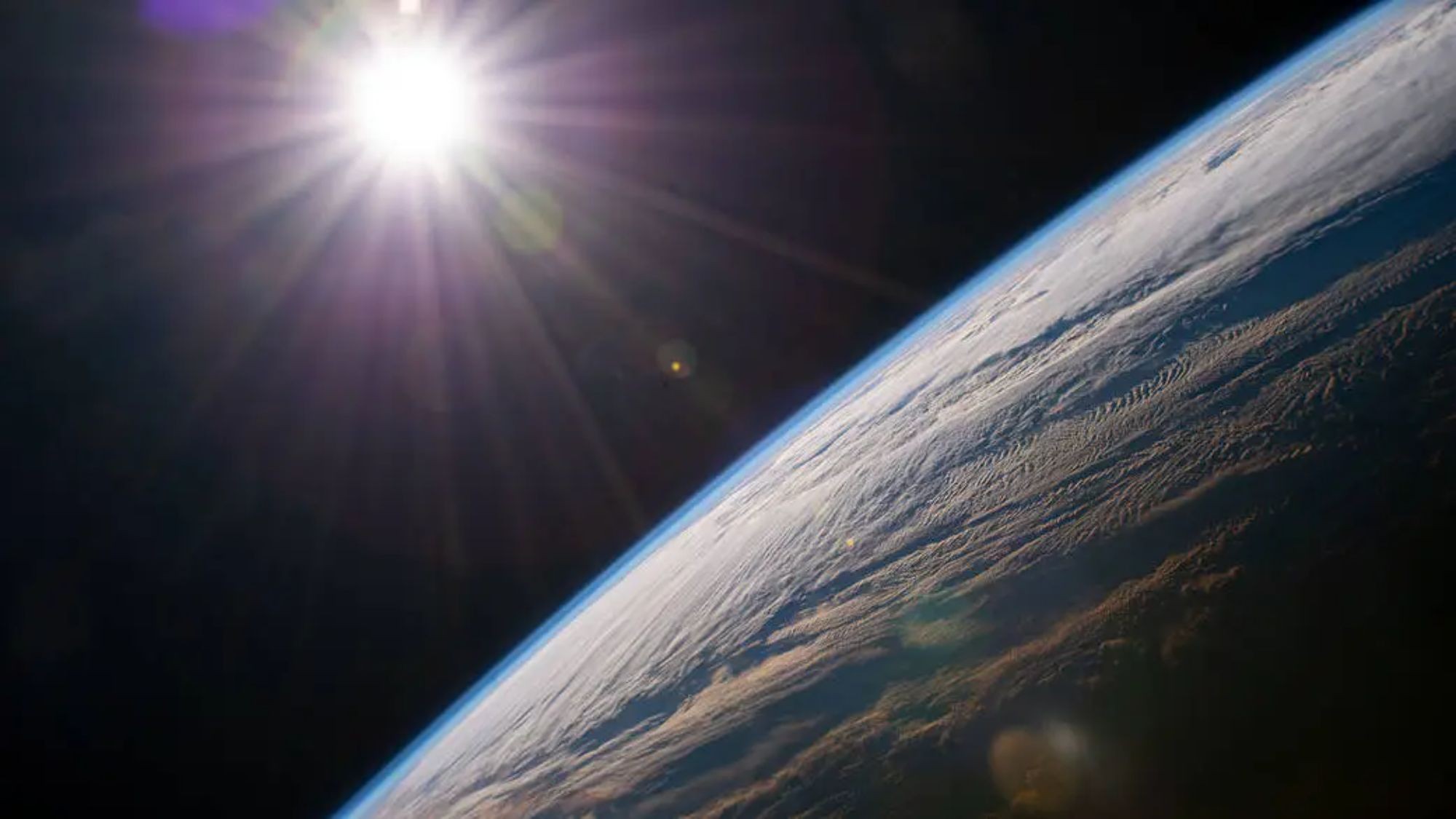
The old story is simple. The sun dies. The sun swells. It eats Earth.
Astronomers have believed this narrative for decades. The timeline is roughly five billion years. The mechanics seem clear: hydrogen runs out. The star bloats into a red giant. Mercury goes first. Then Venus. And Earth? Snack.
But new models say the tug-of-war is not as lopsided as we thought.
The push and the pull
Think of it like gravity and mass losing their minds.
As the sun expands it doesn’t just grow. It gets lighter. Massive stellar winds blow away its outer layers. Half its mass eventually vanishes into space. When mass drops, the gravitational grip weakens. Planets are pushed outward. It is a cosmic trade-off. The tide pulls us in. The mass loss pushes us out.
Old calculations said the tide won. The inward drag was too strong.
The new research by Mats Esseldeurs at KU Leuven says otherwise. The tidal friction was overestimated. Older studies used simplified recipes from decades past. Some even ignored tides entirely. This team used updated internal models of aging stars. They accounted for how the structure shifts. They ran the numbers.
The result? The inward pull is weaker.
Mercury is doomed. Venus is gone. But Earth? It drifts away.
A narrow escape
Earth moves into a wider orbit. Mars joins it. The planet settles into the cold silence around a white dwarf. No engulfment. No incineration. Just a very dark, very faraway sunset.
Esseldeurs notes that the uncertainty has shifted.
“The largest uncertainty no longer comes from tidal calculations but from how much mass the future Sun will lose.”
They used a star named L2 Pup as a test subject. It is about 183 light years away. Similar mass. Similar age. A proxy for our own future sun. Using real observations from L2 Pup the models confirmed that the outward drift should just barely beat the inward slide.
It tips the scales toward survival.
But do not pop the champagne.
Still doomed in practice
For the species currently living on this rock? It does not matter.
The sun grows hotter as it ages. Slowly. Relentlessly. In about a billion years the oceans boil. The atmosphere cooks. Earth becomes a dead charred cinder. Long before the red giant phase even begins.
This finding is not salvation. It is an academic comfort. It changes how we map the lifecycle of solar systems. It helps us predict what happens to exoplanets orbiting dying stars. We can study the population. We can refine the rules of stellar decay.
We just won’t be around to see it.
The data is promising but fuzzy. We need better telescopes. We need more stars like L2 Pup to study. The math points to Earth surviving its star. But the timeline? The details? Those remain stubbornly opaque.
Which is probably for the best. Knowing exactly how long we have left is not exactly comforting. Maybe ambiguity is a kinder way to end things.