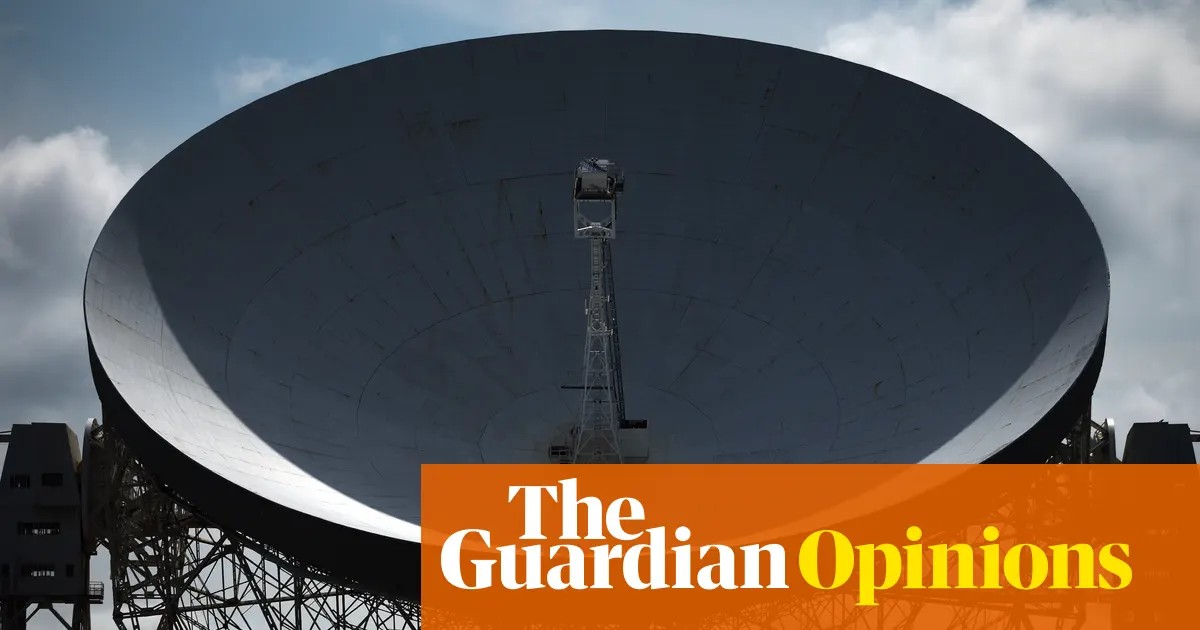
The Lovell telescope at Jodrell Bank isn’t just a piece of hardware. It’s an icon. For decades, it has expanded our view of the universe. It tracked the Sputnik launch in 1951. It still contributes to dark matter research today. Now, it faces closure.
The reason is mundane. And insulting.
Government funding will not continue past March 28. The savings? Just £2.8m a year.
That is the punchline of a bitter story.
This move is the latest cut from the Science and Technology Facilities Council, known as STFC. The body disperses funds for particle, astro, and nuclear physics. Its target? Save £160m over four years. Officials say these are cost overruns. True maybe. But it looks like something else.
It looks like a shift in priorities. The government is deciding what science gets funded. And what it lets wither.
The cost of curiosity
Physics is expensive. No one argues that. Instruments get larger. Power demands skyrocket. From synchrotron beams to massive telescope arrays, the bill is huge. Scientists feel the cost of living crisis too. But a monthly bill for a particle accelerator? That’s another level of pinch.
Still, the context matters. UK Research and Innovation, which includes STFC, is revamping its model. The focus? Economic growth. Measurable outcomes. Fundamental research is under threat.
Look at the cuts. International collaborations are going. Partnerships with Cern in Switzerland are on the chopping block. Long-term, foundational study is taking the hit.
A political blunder
Here is where the STFC and UKRI miss the mark. They misread the room.
Ian Chapman, chief of UKRI, sat in the House of Lords. He called scientists’ reactions “hyperbolic.” He pointed out that overall physics funding has actually increased. Technically, he is right. But it feels cheap.
Valued projects are axed. Ongoing collaborations are cut. Future plans remain intact. That stings. It’s like cutting your salary by taking away your bonus instead of lowering your base pay. The anger is real.
One does not need to be an astronomer to see the optics here. The UKRI budget will hit £10bn by 23. The savings are minor. The fallout is massive. It reminds one of the old Starmer government’s struggles. Tell a big story about growth, then get mired in a row over pocket change.
Who’s really in charge?
UKRI and STFC are arm’s length bodies. That’s the theory. The practice is messier. Ministers who set priorities, like Liz Kendall and Patrick Vallance, have left office. Andy Burnham abolished the Department for Science, Innovation, and Technology. The landscape has changed.
Yet the cuts continue. Or at least, the threat persists. It would seem wise to reconsider the course. Either by the councils or the new government.
We need a conversation. Limited resources exist. How do we balance blue sky research with commercial returns? That’s a hard question. A necessary one. But the warning from physicists is clear. The UK could lose a generation of scientists.
This is one of the few fields where the country credibly claims to be world-leading.
Losing that? That’s a bad bet.
The Lovell telescope stands in Cheshire, waiting. The silence might soon be absolute. Or it might be broken by a rethink. One has to hope the latter. Before the stars go out in the minds of those who study them.