The headlines scream collapse. Ecosystems are buckling, seas are rising, and extreme weather is becoming the new normal. World leaders seem stuck in a loop of delay, ignoring the mounting evidence that greenhouse gas emissions are compounding risks we can no longer afford.
Yet, look closer. Beneath the doom, a shift is happening.
In his new book Despite It All, journalist Fred Pearce argues that we are not doomed. He traces the last forty years of environmental history, highlighting a green transition that is accelerating, if not always at the speed of science. The fossil fuel era isn’t over, and carbon emissions remain stubbornly high. But the momentum has shifted.
Pearce, whose work is now shortlisted for the 2025 Royal Society Trivedi Science Book Prize, sat down to discuss why optimism isn’t just naive hope—it’s a necessary tool.
The Appetite for Solutions
For years, the narrative was binary: either everything is hopeless, or you’re part of the problem. Pearce detects a change. People are tired of paralysis. They want to know what actually works.
“We need pessimists to point out the problems,” Pearce says. “We need optimists to come up with some solutions.”
He rejects the idea that we must choose between despair and denial. The middle ground is action. It involves both personal choices and strategic pressure on governments. It also involves embracing technology.
“Some people think tech fixes are bad,” he notes. “I stress they are good.”
Thirty years ago, at the Earth Summit, renewable energy was a niche concept. Wind turbines were scattered masts in California. Solar power was too expensive for anything but satellites and electric cars. Today, those same technologies dominate. The progress isn’t fast enough. CO2 levels are stable, not falling. We may have passed some tipping points. But the trajectory has changed.
Rewilding: Let Nature Fix It
One of the most compelling arguments in Pearce’s book is the case for stepping back. We have spent centuries trying to manage nature like a garden, pruning and controlling every element. This approach often fails.
Nature is better at repairing itself.
In parts of Europe and North America, agricultural land is being abandoned. When humans leave, life returns. It doesn’t look like the pre-industrial past we romanticize. It looks like evolution in real-time. Forests regrow. Species adapt.
“Nature is constantly, if you like, remaking herself,” Pearce explains.
This doesn’t mean we should abandon all stewardship. The Netherlands learned this the hard way with a large rewilding project that ended in the mass death of animals because planners didn’t fully account for ecological chaos. But the core lesson remains: give nature room to evolve.
We need to stop trying to return to a “perfected” past. That never existed. Instead, we let nature find its own balance. It is messy. It is unpredictable. But it works.
“We are not rewilding where we’re trying to [garden] nature to get back to some sort of [perfected] past… but we can give nature room to evolve.”
The Population Bomb is Defusing
The fear of overpopulation has haunted environmentalism for decades. In the 1980s, the “population bomb” was the central anxiety. UN conferences focused on controlling fertility, often through coercive means like China’s one-child policy. The logic was simple: more people mean more destruction.
Pearce argues that fear has been replaced by facts.
Fertility rates have halved globally. In most of the world, they are near replacement levels. Why? Women are educated. They have careers. They have reproductive rights. Medical advances mean fewer children survive to adulthood, so parents choose to have fewer.
“The population bomb is being defused,” Pearce states.
There is residual momentum—the population is still growing slightly—but the exponential curve has flattened. We are no longer doubling every thirty years.
This shift is driven by a feminist revolution. As women gain agency, family sizes shrink. Pearce warns against the “Elon Musk approach” of trying to reverse this trend. That is not only morally wrong but economically foolish. The real issue isn’t the number of people in the Global South. It is consumption in the Global North.
“We now have a consumption bomb more than a population,” he says.
Inequality and the Cost of Living
If overpopulation is a red herring, inequality is a ticking time bomb. The gap between the ultra-wealthy and everyone else is widening. This isn’t just unfair; it’s destabilizing.
When Pearce was young, the assumption was that inequality would diminish. Aid policies were built on that hope. Since the 1980s, that narrative has collapsed. Politics shifted toward deregulation and wealth accumulation.
“Rising inequality undermines our ability to manage serious global issues like climate change,” Pearce argues.
It creates political stress. It fuels instability. And it distracts from solutions.
Bridging the gap doesn’t require destroying the planet. A reasonable standard of living for everyone is technically feasible. It requires better technology. It requires leveling up the poor and leveling down the obscene riches of the top 1%.
“We are in a world where we are very much [in charge] of what is going on,” Pearce notes. “We have our own sensibilities. And it’s not wrong for us to [want] to [intervene] sometimes.”
The Renewable Tipping Point
The final piece of the puzzle is energy. The political backlash against renewables is fizzling out. In the U.S., denial persists, and there is a push to return to fossil fuels. But in the rest of the world, the tide has turned.
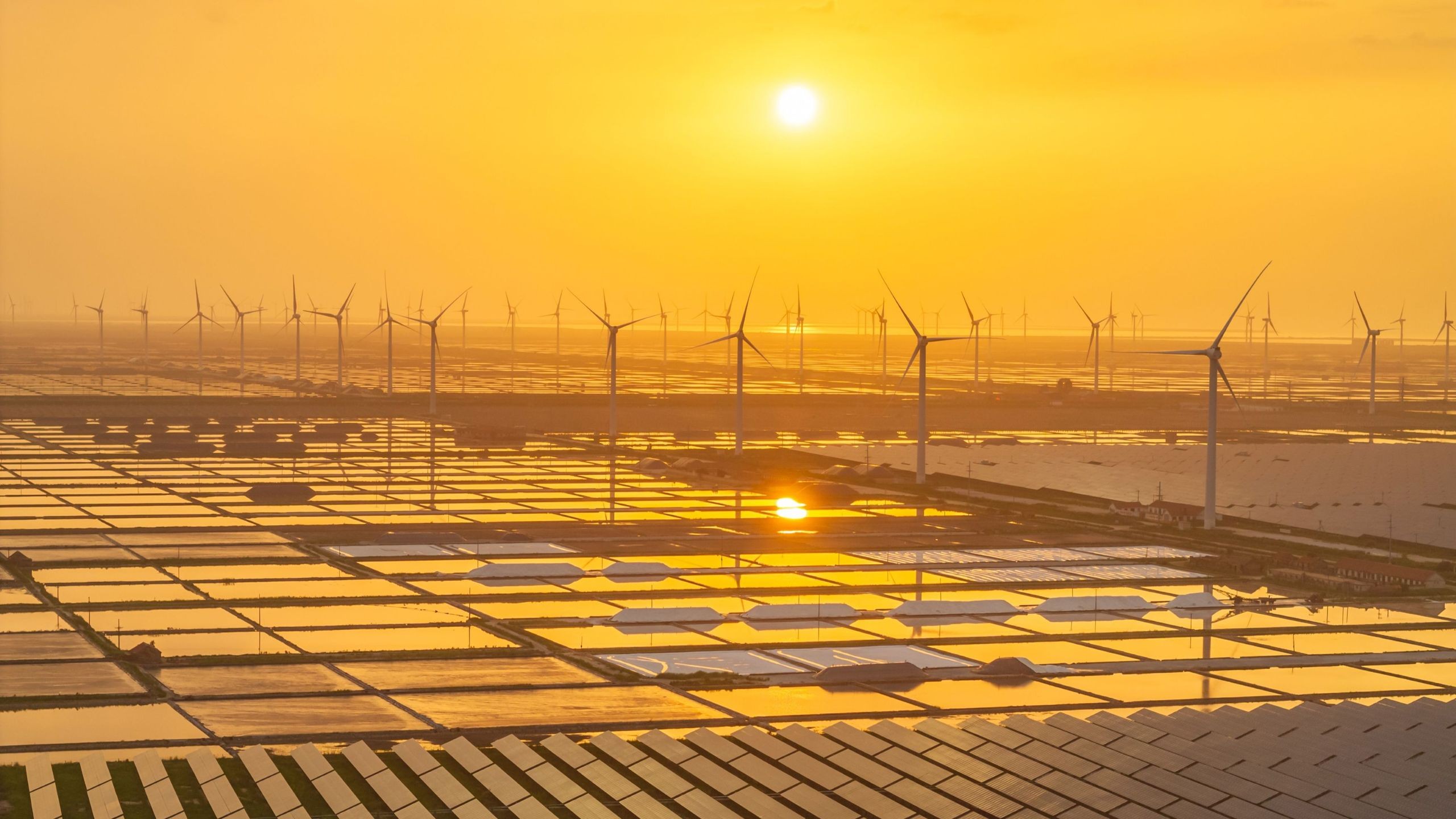
China, despite its past reliance on coal, is now driving down the cost of renewable energy. Solar power is cheaper than fossil fuels in most contexts. It is faster to install. You don’t need massive power plants; you can bolt panels onto roofs.
From remote villages in Africa to megacities in India, solar is expanding.
“It is also quicker to install,” Pearce points out. “You don’t have to build a huge [power station], you can do it in [bits] and pieces.”
Grid issues remain. There are challenges with storage and distribution. But the economic argument is irresistible. Renewables are winning not because of altruism, but because they are cheaper.
The Road Ahead
We are late on this case. Pearce admits that. We are behind schedule. The climate is changing faster than our policies allow.
But we are also on the case.
The technology exists. The economic incentives align. Nature is recovering where we let it. And the demographic pressures that once seemed insurmountable have eased.
It won’t be easy. We need to address inequality. We need to support the poor. We need to accept that nature won’t look the way we want it to.
But we can push open half-closed doors. We can choose to act.
The alternative isn’t just bad. It’s unnecessary.