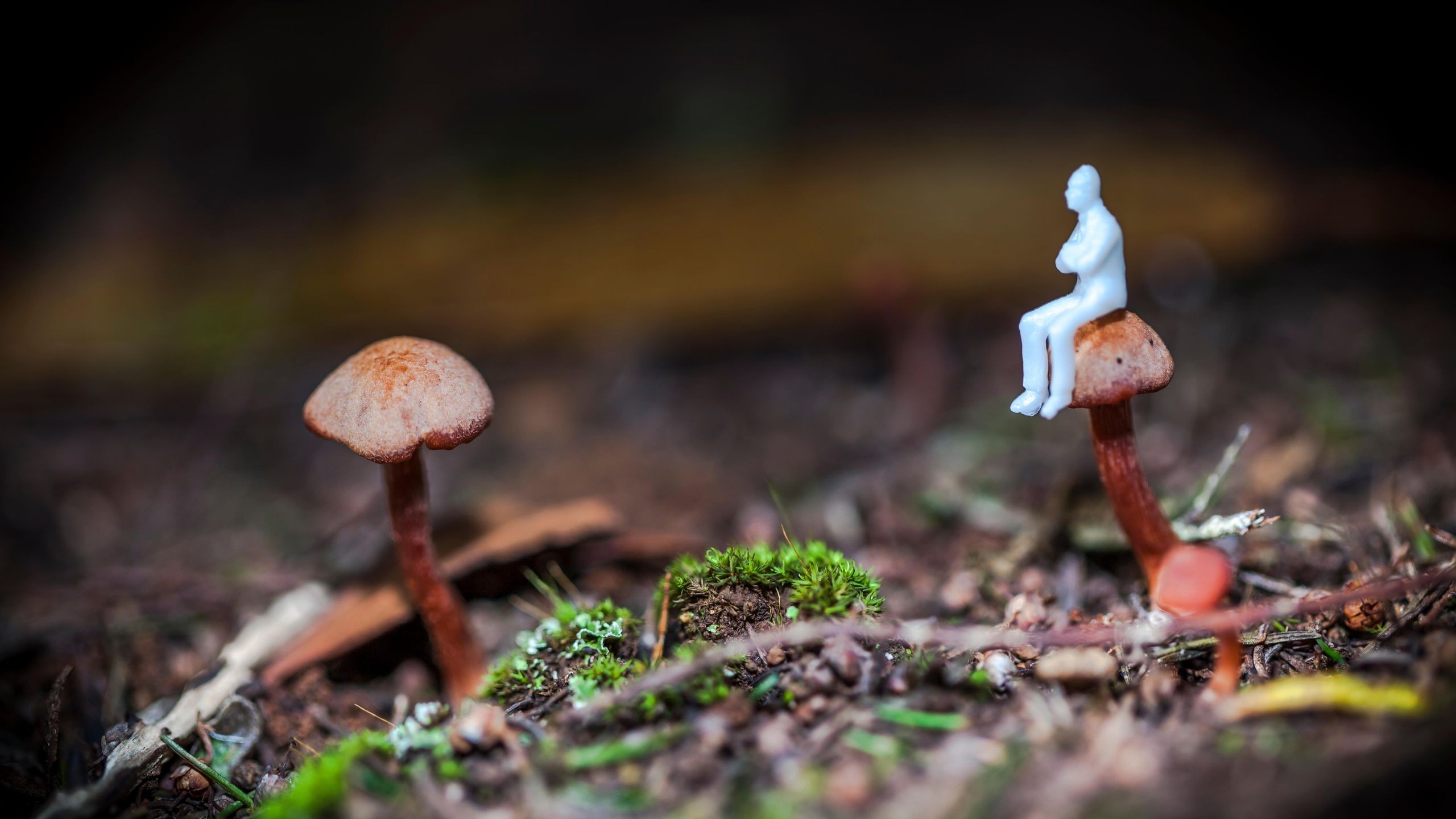
It sounds insane.
But hundreds of people in China see it every year. No swirling colors. No geometric trippiness. No pulsating walls. Just… little people. Hundreds of them. Tiny elves, clowns, or gnomes crawling up the legs of chairs or diving into soup bowls. They wink. They tease. They are hyper-real, three-dimensional, and entirely fake.
This is not a folk tale anymore. It is a medical syndrome.
The culprit is a specific mushroom. Lanmaoa asiatica. It grows with pine trees in Yunnan Province and parts of the northern Philippines. It tastes good, which is the problem. People eat it undercooked. They think they are having dinner. Twelve hours later, the Lilliputian syndrome kicks in.
“It sounds so impossible,” admits Colin Domnauer.
Domnauer was just an undergrad when he heard about it. He decided to make the “mushroom madness” his entire PhD. Now a researcher at the University of Utah. He went to China. He went to the Philippines. He found that Western science had dismissed the hallucinations as myth or social acting. A coping mechanism, they said. Not chemistry.
Domnauer disagreed. He found DNA that proved the same species was behind the reports in two separate continents. Same fungus. Same weird effect.
The Lilliput Effect
Let’s say you eat a raw chunk of L. asiatica today. Here is what happens.
First. Nothing. For about half a day. You might feel a little queasy. Around fifty percent of victims get stomach issues, though Domnauer notes the data isn’t perfect because nobody was really tracking their diet closely enough to say if the mushroom caused the nausea or if it was the other stuff in the stew.
Then comes the fatigue. You get delirious. Weak.
Then. The guests arrive.
They aren’t vague shapes. They are rendered. Brightly colored. Detailed. They interact with the room. One report mentioned sprites diving off spoons. Another said they crawled under doors. They feel real enough to provoke a reaction, usually amusement or mild annoyance. Occasionally fear, but mostly just weirdness.
Why does this matter? Because the science has no clue what causes it. We have no compound identified. No chemical structure mapped. Just a consistent set of symptoms across hundreds of hospitalized patients in Yunnan. In one study of four hundred cases? Ninety percent reported the little people. That is a high correlation for a “myth.”
The hallucinations last days. Not hours. Days. Yet? No deaths. No organ failure recorded in the hospital reports. Physiologically. It seems harmless. That feels wrong to me. Something that rewires visual cortex for three days should cost something. Or maybe I am biased by my own limited chemistry knowledge.
Ignored by Experts
Why did this take decades to study?
Scientists in Papua New Guinea heard about this back in the 1930s. Before we even knew psilocybin existed. But nobody isolated the compound. Maybe the tech was lacking. Maybe they didn’t look hard enough. Or maybe. Just maybe. They couldn’t wrap their heads around tiny fairies. It felt too fantasy-based to be biological. So they shrugged it off as “social acting.” People using mushrooms as an excuse to act out. A scapegoat.
It is lazy science. Dismissive, certainly.
Domnauer went to Yunnan market. He asked locals, “Which one makes you see little people?”
They pointed.
He bought them. He took them home. He sequenced them. They were all Lanmaoa asiatica. One species. Responsible for this global mystery.
The culture there isn’t mystical. There is no ritual. No shrine to the mushroom gods. People just like how it tastes. They know it can mess with your head if you don’t cook it properly. So? They still eat it. It’s just part of life there. A quirky risk.
That acceptance baffled Domnauer initially. Here in the West. We treat hallucinogens as sacred or dangerous. In Yunnan. They are just dinner with a side of hallucinations if you slip up.
A Smoker Gun
The real proof came from the Philippines.
Two years ago. Reports from the northern Philippines mirrored the Chinese stories exactly. Same little people. Same timing. Same undercooking context. But had never been studied. Had nobody looked at the DNA.
Domnauer went there. Forest trekking. Endless humidity. Searching for a specific mushroom in the underbrush. It was a long shot. If he didn’t find them there? Then it might just be a local phenomenon. Two independent cultures hitting the same symptom suggests a shared biological cause, not just a shared delusion.
He was there on the last day.