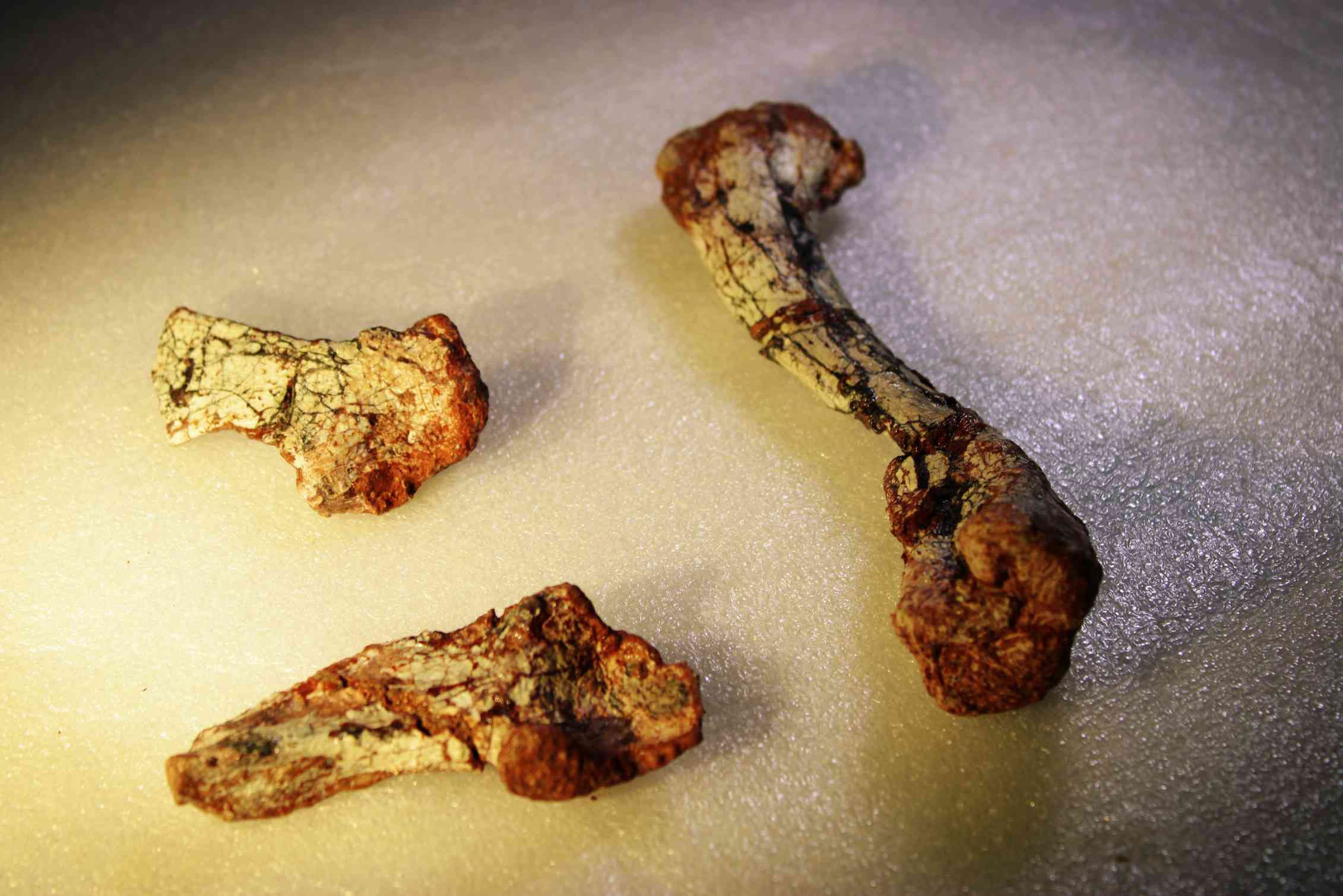
Fragmentary bones found in Brazil. Forgotten for two decades. Now they tell us everything we need to know about a small predator that walked the earth 240 million years ago.
Meet Silescelida acristata. It’s not a dinosaur. It’s not a crocodile. But it’s their close cousin. A missing link in the chain of life that eventually gave us birds and crocodiles. And it turns out, it was hanging out in southern Brazil while the rest of the world was still recovering from Earth’s worst extinction event.
Why this new reptile matters for dinosaur origins
We tend to think of dinosaurs as the big bad bosses of history. But before them? The Triassic Period was a mess of experimentation. Evolution was throwing shapes at the wall to see what stuck.
Silescelida acristata lived during the Middle Triassic. Specifically, around 240 million years ago. This was right after the Permian-Triassic extinction. That event wiped out roughly 90% of marine species and 70% of terrestrial vertebrates. Chaos.
In that vacuum, archosauriforms—reptile relatives of modern crocs and dinos—started to diversify. This new fossil helps pin down exactly how. It clarifies the early evolutionary tree of archosaurs. The group that includes everything from ancient lizards to T-Rex to the bird on your windowsill.
What did Silescelida look like?
It was small. Slender. About the size of a tiny alligator. It moved on four limbs. Think of it as a quiet hunter in the shadows of the recovering ecosystem.
The diet? Probably small animals. It wasn’t a top-tier predator yet. But it was part of the food web that rebuilt the planet.
Most fossils are just scraps. We find teeth. A jawbone. A piece of rib. Silescelida is mostly limb bones. Usually, paleontologists groan at fragmentary material. But here? It’s gold.
How leg position changed everything
The key is the femur. The thigh bone.
Most early reptiles had sprawling legs. Legs sticking out to the side. Like a lizard today. It’s inefficient. Draggy. You can’t run fast. You can’t chase anything.
Silescelida had a semi-erect posture. Its legs were positioned closer to underneath its body. Lower on the side than the center, but still much more vertical than a lizard’s.
Why does that matter?
It reduces drag. It allows for better balance. It sets the stage for the efficient locomotion that archosaurs—dinosaurs and crocs—would perfect later. This wasn’t a final form. It was a prototype. An evolutionary trial run.
“This type of transformation is related to the set anatomical changes that would later prove fundamental.”
Basically, without these postural shifts, we might not have had dinosaurs. Or at least, not the kind we know.
Where were these reptiles hiding?
Here is the twist. We thought this group was rare. We thought it was confined to Africa, Asia, and Europe.
Phylogenetic analysis suggests Silescelida is related to Euparkeriidae. A group of archosauriforms we barely understand.
But it was found in Brazil. Near Dona Francisca, in the Quarta Colônia Geopark of Rio Grande do Sul.
This expands the geographic range of Euparkeriidae-related animals significantly. It suggests these reptiles were global players during the Triassic. Not isolated island dwellers. They were everywhere. Or at least, the fossil record was lying to us by ignoring South America.
South America is becoming the new center of gravity for Triassic paleontology. For a reason. The rocks there hold clues we’ve ignored for too long.
The story of a lost fragment
How do you name a fossil after silence and a leg?
Bad housekeeping.
Part of the Silescelida specimen—the part with the essential provenance data—went missing. It vanished from the collection for more than 20 years. Just… gone.
Researchers from the Federal University of Santa Maria (CAPPA/UFSM), working with teams from UFRGS and PUCRS, kept the main bones but lacked the context. They couldn’t formally describe the species without knowing where it came from.
Then, in 2022. During a routine technical visit to the Pontifical Catholic University of Rio Granite do Sul (PUCRS) archives. Someone looked in a drawer. Or a box.
There it was. The lost fragment.
The name Silescelida reflects that. “Sil” for silence (the forgotten years). “Celida” for leg (the primary material preserved).
“Acristata” means “without a crest.” Specifically, the femur lacked a trochanter. A bony ridge where tail muscles attach. Most relatives have it. This guy didn’t. It’s a distinguishing feature. A biological signature.
Why fragmentary fossils shouldn’t be ignored
We have a bias toward the complete. The full skeleton. The pristine skull.
But the majority of fossils are broken. Incomplete. Isolated bones.
This study proves that fragmentary material isn’t useless trash. It can reveal posture. It can reveal phylogeny. It can rewrite our understanding of distribution.
Silescelida shows us that the evolutionary history of archosauriformes is broader and more complex than we thought. It wasn’t a straight line to the dinosaur age. It was a branching path, full of small, slender predators testing out new ways to walk.
The discovery reinforces Rio Grande do Sul as a heavyweight contender for Triassic research. It’s one of the world’s best spots for finding pre-dinosaur life.
We still don’t have the whole picture. The Triassic is a dark room. We’ve just turned on one small light.
What else is sitting in those drawers?
- Silescelida acristata
- Quarta Colônia Geopark
- Euparkeriidae
- Archosauriforms
- Middle Triassic Period
- Permian-Triassic extinction event